Hospitals, Schools, Daily Needs: A Home Checklist
Quick Answer
A family-friendly home location offers dependable access to 24-hour emergency care, schools with convenient transport, pharmacies and everyday essentials. Actual travel times, late-night accessibility and the needs of children and ageing parents determine how practical a location is for daily living, beyond the distances advertised in property brochures.
It is 11 pm on a Tuesday. Your father feels a sharp pain in his chest. Do you know, right now, exactly which emergency room you would drive to, and how long it would take?
Most homebuyers don’t. And yet almost every brochure promises “schools and hospitals nearby.” The sales deck shows neat circles: a hospital at 4 km, a school at 3 km, a mall at 6 km. Those numbers look reassuring. However, they usually come from Google Maps on a quiet Sunday afternoon.
Your real life does not happen on Sunday afternoon. It happens at 9 am in office traffic, at 3:30 pm when school ends, and late at night when a child runs a high fever.
If you are in your 30s, 40s, or 50s, you likely carry two sets of worries at once. On one side, you have children who need school every day. On the other, you have parents who may need a doctor at short notice. This is the life stage where social infrastructure stops being a brochure word and becomes a daily routine.
Be Among the First to Own a Legacy
In this guide, you will learn how to test any shortlisted home in Hyderabad with three simple timed drives. As a result, you will walk in knowing whether a pin truly works for your family, or only looks good on paper.
Minutes at 11 pm, Not Kilometres on the Brochure
First, let’s fix the biggest mistake buyers make. They trust distance. Instead, you should trust time.
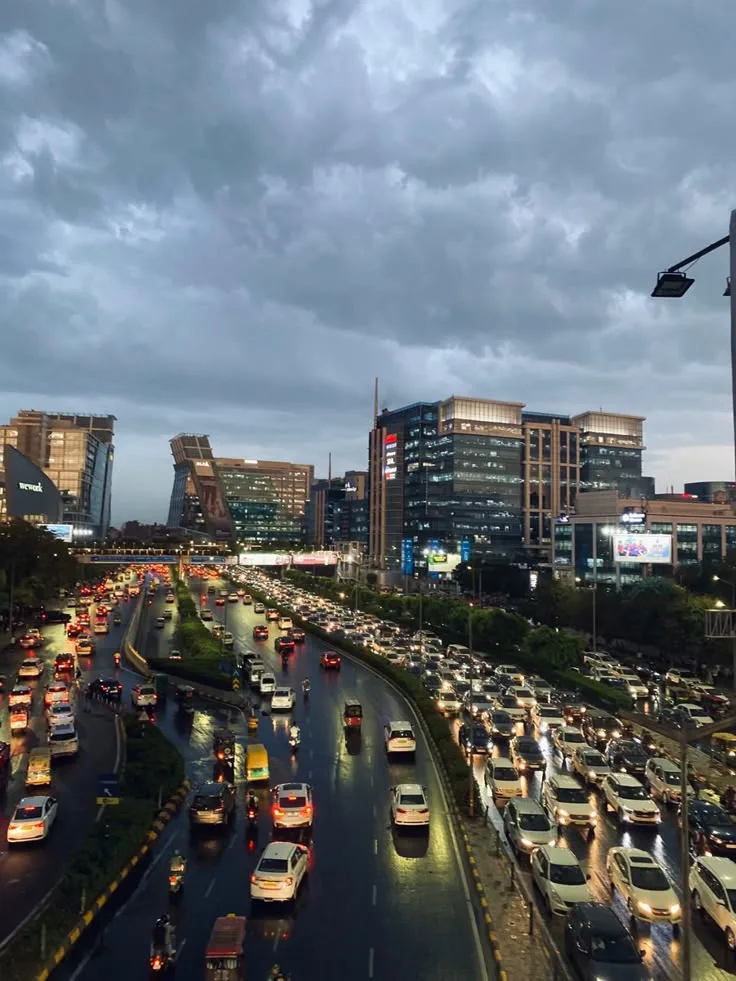
Five kilometres can mean 10 minutes at midnight and 40 minutes at 9 am. Similarly, a road that flows well in dry weather can choke in Hyderabad’s monsoon. Therefore, a single radius tells you almost nothing.
Here is the fix. Stand at one gate and run three clocks.
The Three-Clock Test
| Clock | When to drive | Where to drive | What it tells you |
|---|---|---|---|
| Clock 1: Work | Tuesday, 9 am | Your office | Your daily commute cost |
| Clock 2: School | Weekday, 3:30 pm | Your child’s school | The second family commute |
| Clock 3: Emergency | Any weeknight, 11 pm | A 24-hour ER you trust | Your safety margin |
Use the gate you will actually use every day. Do not start from the show-flat entrance. Then write each number down. If you rely on memory, you will round in the seller’s favour.
Also, keep two small factors in mind. Rain can slow every clock, so if you visit in dry weather, add some buffer in your head. Likewise, if your late-night route uses the ORR, check whether toll lanes or exits change your path. Just note it and move on.(Source)
A sample calculation: Suppose a brochure says “hospital at 5 km.” You drive it and record 12 minutes at 11 pm and 35 minutes at 9 am. Now you know the real range is 12 to 35 minutes, not “5 km.” That one honest number is worth more than the whole brochure page.
A Clinic Is Not an Emergency Room
Next, look closely at what “hospital nearby” really means. When you search Google Maps, the results mix clinics, dental centres, diagnostic labs, and full hospitals. They all look the same as pins. However, they do very different jobs.
So split your healthcare needs into three pins.
| Pin | What it handles | How often you need it | What to check |
|---|---|---|---|
| 1. Clinic or diagnostic centre | Fever, blood tests, routine check-ups | Often | Walking or short-drive distance |
| 2. Maternity or paediatric care | Pregnancy, newborn and child care | Depends on your family | Doctor availability, hours |
| 3. 24-hour emergency room | Chest pain, a fall, an accident | Rarely, but urgently | Open casualty after 10 pm, night drive time |
The third pin matters most. Ask yourself one simple question: would I actually take my family there with chest pain? If the answer is no, that pin does not count.
Many families in Hyderabad’s west IT belt already use hospitals such as AIG in Gachibowli or Continental in Nanakramguda, often through employer or insurance networks. That is a useful starting point. Check which hospitals your insurer covers, then time the drive to that one.
What NABH tells you. NABH accreditation, run under the Quality Council of India, is a quality and patient-safety standard. You can verify a hospital on nabh.co. It helps you judge care quality.
What 108 does. In Telangana, 108 is the toll-free emergency ambulance service run by EMRI Green Health Services. Save it in every phone at home. Still, an ambulance needs a receiving hospital, and it travels on the same roads you do. In other words, 108 brings trained help faster. It does not shrink a 40-minute road.
The School Run Is a Second Commute
Now let’s talk about school. Parents often choose a famous school first and a home second. That order can quietly cost you hours every week.
Think of it this way. If your child’s school sits 12 km away and no bus comes to your gate, someone in your house takes a second job: driver.
So ask better questions at the site visit:
- Does a school bus enter this gate?
- At what time does it arrive and return?
- Does it serve the board you actually want?
Do not accept “many schools nearby” as an answer. A brand on Google is not a bus at your gate.
A sample calculation: Imagine two homes.
| Home A | Home B | |
|---|---|---|
| Price difference | ₹8 lakh cheaper | Base price |
| School bus at gate | No | Yes |
| Parent drive time per day (sample) | 80 minutes (two round trips) | 0 minutes |
| School days per year | About 200 | About 200 |
| Hours spent driving per year | 80 × 200 ÷ 60 = about 267 hours | 0 |
That is roughly 33 full eight-hour workdays a year, every year, until your child finishes school. Suddenly, the ₹8 lakh saving looks very different.
Search behaviour supports this too. School searches cluster inside the established west belt, in areas like Nallagandla, Madhapur, Gachibowli, and Kokapet. That shows where families already look. It is not a ranking. If you are weighing an outer pocket, read our inside ORR vs outside daily life piece and the Tellapur locality guide before you decide.

Daily Needs: Pharmacy and Kirana Before the Mall
Brochures love malls and multiplexes. But be honest: how often does a mall solve a Tuesday problem?
Daily needs are smaller and far more important. Here is your Tuesday list:
- Milk and groceries from a kirana store
- Medicines, ideally from a 24-hour or late-night pharmacy
- A working ATM
- A place to eat when both adults work late
Delivery apps help, of course. However, they often fail in heavy rain. They also struggle in newer pockets where few riders operate yet. So treat apps as a backup, not the test.
| Need | How often | Weekday value | Weekend mall value |
|---|---|---|---|
| Pharmacy (late hours) | Weekly, plus emergencies | Very high | Low |
| Kirana and milk | Daily | Very high | Low |
| ATM | Weekly | High | Medium |
| Multiplex and shopping | Monthly | Low | High |
Here is a point most buyers miss. A late-night pharmacy next to a real ER is part of healthcare proximity. After a midnight visit, you need medicines immediately. Therefore, look for that pharmacy during your 11 pm drive.

Ageing Parents and Infants Change the Order
Not every family should rank these needs the same way. Your household decides the order.
| Household | First priority | Second priority | Third priority |
|---|---|---|---|
| Ageing parents at home | 11 pm ER clock | Pharmacy and clinic | Lift access in the building |
| Infant or young baby | Paediatric care | Late pharmacy | ER clock |
| Dual income, school-age kids | School bus at gate | Office commute | ER clock |
| Couple, no dependents | Office commute | Daily needs | ER clock |
If your parents will live with you, put the emergency clock first. Also, check one practical detail: is there a lift from the parking level to your floor? Stairs become a real barrier with age. For layout ideas, see our guide on whether your 3 BHK house plan is functional. If your parents actually need a senior community, our post on retirement homes in Hyderabad covers that.
If you have an infant, a good paediatrician and a late pharmacy matter more than international-school branding. That school is years away. Fevers at 2 am are not.
If you are dual-income with older children, the school bus and your office commute come first. Then check the ER clock.
Run This on One Site Visit
Finally, here is the printable checklist. Take it to every shortlisted home.
- Stand at the gate you will actually use, not the show-flat entrance.
- Drive to the ER you named, at night or as late as you can. Write down the minutes. Repeat at 9 am if a parent would go then.
- Confirm that ER has a working emergency entrance after 10 pm. Look for a pharmacy that stays open.
- Check NABH status on nabh.co, or note why you trust this hospital anyway. Remember, this checks quality, not distance.
- Save 108 in every phone. Know that it does not shrink a 40-minute road.
- Ask the association or sales team which school buses enter the gate, and at what time. Do not accept “schools nearby.”
- Walk or drive 10 minutes to find kirana, medicines, and an ATM. Note what you can only get by app.
- If parents will live here, check the lift from parking. A doctor who does home visits is a bonus, not a replacement for the ER.
- If both the school and the ER sit back across the ORR, you are buying a second daily commute. Read the inside-ORR piece before you call that a discount.
The pass rule: If you cannot name the ER and the pharmacy without opening the brochure, the pin fails.
Ready to test a home in person? Book a site visit and bring this list along.
Pros
- Assess commute times during peak hours and late at night.
- Identify a nearby 24-hour emergency room with suitable facilities.
- Confirm school bus availability and pickup timings within the community.
- Check access to late-night pharmacies, grocery stores and other daily essentials.
- Verify hospital accreditation through official NABH records when assessing healthcare quality.
- Keep Telangana’s 108 emergency ambulance number accessible to all family members.
- Prioritise location services based on your household’s needs, including those of children and ageing parents.
Cons
- Rely solely on kilometre-based distances mentioned in property brochures.
- Assume every clinic listed on Google Maps provides emergency care.
- Treat the presence of nearby schools as proof of convenient school transport.
- Consider malls and entertainment centres a substitute for everyday essentials.
- Confuse hospital accreditation with proximity or emergency accessibility.
- Assume an ambulance can eliminate delays caused by traffic or long distances.
- Choose a location based on another family’s priorities without considering your own routine.
Key Takeaways
- Time beats distance. Run three clocks from one gate: work, school, and 11 pm emergency.
- Split healthcare into three pins: clinic, maternity or paediatrics, and a 24-hour ER.
- NABH checks quality. 108 brings an ambulance. Neither replaces a close ER.
- A school without a bus to your gate becomes a second daily commute.
- Pharmacy and kirana matter more than a mall.
- Ageing parents and infants move the ER and pharmacy to the top of your list.
- If you cannot name your ER and pharmacy from memory, the pin fails.