East-Facing House Vastu: Complete Layout, Plan & Do’s/Don’ts (2026)
Quick Answer
For an east-facing house, Vastu recommends the main door on the east wall, the pooja room in the northeast, the kitchen in the southeast and the master bedroom in the southwest. Keep the northeast light and open, while flats can use bed direction, furniture placement and simple dosha remedies where structural changes aren’t possible.
You already know your plot or flat faces east. Now you need to think about what you want to do. You need to figure out where the door of the east facing house will go, which room will be where and what to do if the builders layout does not match what the books say.That is exactly what this east facing house vastu guide is for.
Vastu for home is not one rigid stamp. Sources sometimes disagree on exact pada numbers, and apartments cannot always shift kitchens or toilets. Still, a direction-specific framework helps you make better choices before you finalise plans, interiors, or remedies. For the wider system of mandalas and directions, start with Vastu Shastra principles and modern apartment adaptations (https://asbl.in/blog/how-to-incorporate-vastu-shastra-to-your-modern-home-design/). For other house orientations, keep the complete Vastu guide for apartments and homes 2026 (https://asbl.in/blog/complete-vastu-guide-for-apartments-homes-2026-room-by-room/) open as a companion.
Why an East-Facing House Is Considered Auspicious
East is linked to the rising sun. Morning light entering from this side is traditionally tied to health, clarity, and fresh beginnings. In Vedic architecture, Surya’s direction supports active living, study, and positive momentum for the household.
East-facing homes also tend to feel brighter in the first half of the day, which many families experience as practical comfort rather than only symbolic value. When the entrance and northeast stay clear, the plan supports both tradition and daily use.
That said, an east-facing entrance alone does not make every room correct. A kitchen in the wrong corner or a blocked northeast can still create imbalance. Orientation is the starting advantage. Layout is what decides whether the advantage holds.
If you are still choosing between directions for a flat, the house facing direction guide (https://asbl.in/blog/house-facing-direction-which-direction-is-best-for-your-flat/) compares options without treating any single face as the only “good” choice.
Be Among the First to Own a Legacy
Main Door Placement: Finding the Right Pada
Vastu divides each outer wall into equal segments called padas. For an east wall, most classical systems use nine divisions from north to south. The main door should sit on a favourable pada, not on every random stretch of the wall.
Here is where honest sources diverge. Some recommend the 3rd or 4th pada. Others prefer the 4th or 5th. A few emphasise the 5th alone. Treat any single absolute number with care. Plot size, road setbacks, and compound wall openings can shift what is actually buildable.
Practical guidance for most east-facing plots:
| Preference | Typical advice |
|---|---|
| Preferred zone | Middle to upper-middle of the east wall (often 4th or 5th pada) |
| Avoid | Extreme southeast corner door on a weak pada; heavy blockage opposite the door |
| Approach | Keep the pathway clear; avoid a mirror that reflects the door directly |
| Confirmation | Ask a qualified Vastu consultant to mark padas on your exact site plan |
East facing main door vastu pada placement works best when the door opens inward smoothly, the threshold stays clean, and the first visual after entry is open space rather than a toilet wall or staircase face. Height, double-leaf proportion, and a well-lit porch matter more in practice than ornamental extras alone.(Source)
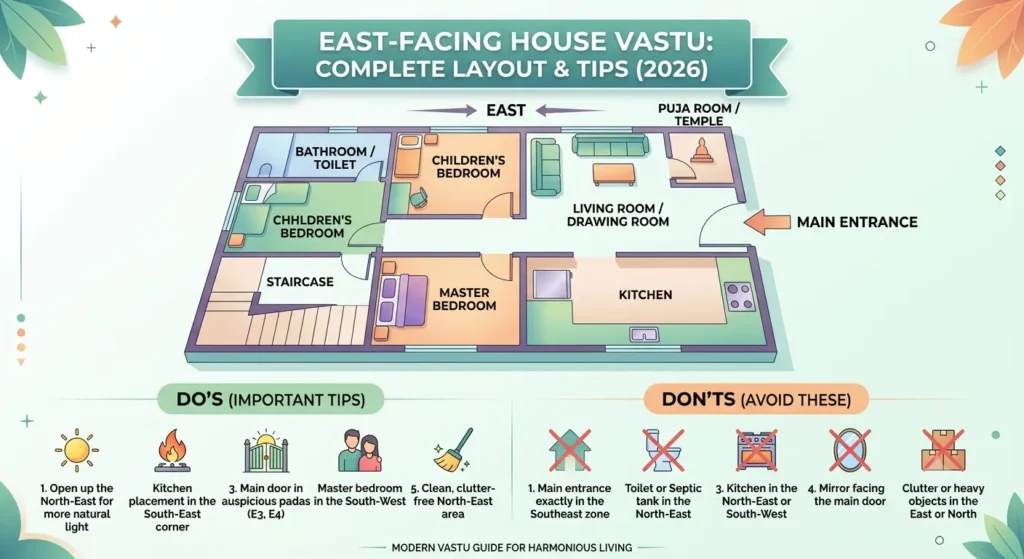
A Complete 30×40 East-Facing Layout, Room by Room
A 30×40 plot (about 1,200 sq ft) is a size in Hyderabad and other Indian cities so it makes a useful worked example for an east facing house vastu plan 30×40.
Assume the shorter side (30 ft) faces the road on the east. The depth runs 40 ft toward the west. The north-east corner of the plot should stay relatively open and lighter than the south-west.
Sample room map (not a substitute for architectural drawings):
| Zone | Suggested use on a 30×40 east-facing plot |
|---|---|
| East centre (4th/5th pada) | Main entrance and foyer |
| Northeast | Pooja, open court, or light living spillover |
| Southeast | Kitchen |
| Southwest | Master bedroom |
| Northwest | Guest bedroom, kids’ room, or utility as space allows |
| South or southwest | Staircase (clockwise rise preferred in many schools) |
| West | Living or dining, depending on plan depth |
| Centre (Brahmasthan) | Keep relatively free; avoid heavy overhead tanks and clutter |
A coherent plan places circulation so you do not walk from the east door straight into a toilet or under a low beam. Living spaces can sit toward the north and east. Heavier rooms and storage sit toward the south and west. This single map is what separates a useful article from a list of scattered rules.
Adjustments for setbacks, parking, and municipal bye-laws still apply. Vastu guides placement intent. Sanctioned drawings decide what you can build.
Living Room and Common Areas
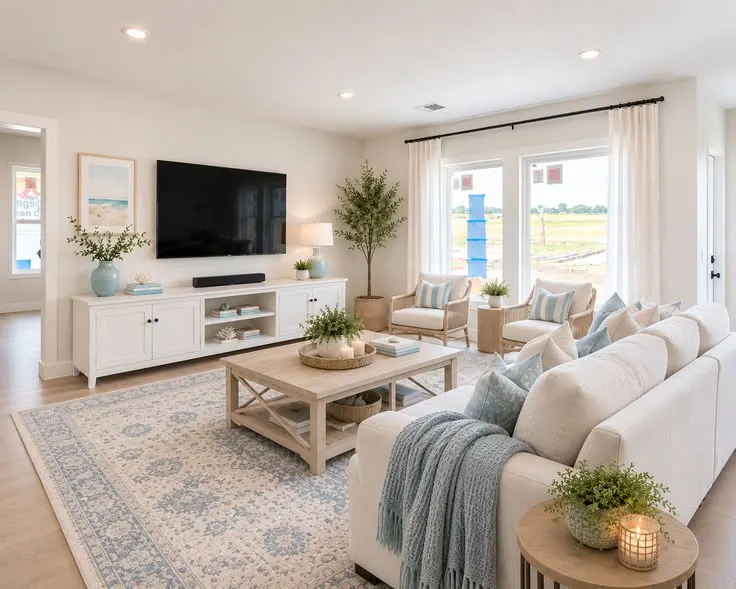
In an east-facing home the living room often sits near the entrance or toward the north-east and north. Morning light then reaches seating without forcing the family into western pockets all day.
Place the sofa against a solid south or west wall when possible so people sit facing north or east during conversation. Avoid stacking cabinets in the northeast corner of the living room.That corner should feel lighter than the southwest.
Dining works well toward the west or northwest of the living cluster. At the dining table many Vastu schools prefer the head of the family facing east or north while eating. Keep mirrors on dining walls carefully: a mirror that multiplies food is sometimes welcomed, but a mirror that stares at the main door is not.
Common-area flooring can stay light toward the east and north. Darker finishes, if used, sit better toward the south and west.
Kitchen and Pooja Room Placement
Kitchen: Put the kitchen in the southeast of the fire zone (Agni). Orient the stove so the cook faces east while preparing food. If southeast is impossible, northwest is the next option many consultants discuss, though southeast remains the first preference for east-facing houses.
Avoid a kitchen in the northeast. Water and fire conflict there creates one of the more frequently flagged doshas. Keep the sink and stove from sitting on the same counter line if you can separate wet and fire zones even slightly.
Pooja room: Place the pooja room in the northeast. Keep it clean elevated if space allows and free from storage clutter under the altar. The idol or sacred image should generally face west or east so the devotee faces east or west during prayer depending on the deity placement your family follows. Do not place the pooja under a toilet on the floor when you are designing a duplex.
Together, southeast kitchen and northeast pooja form the spiritual and fire balance most east-facing plans try to protect.
Bedrooms: Where to Sleep, and Which Way to Face
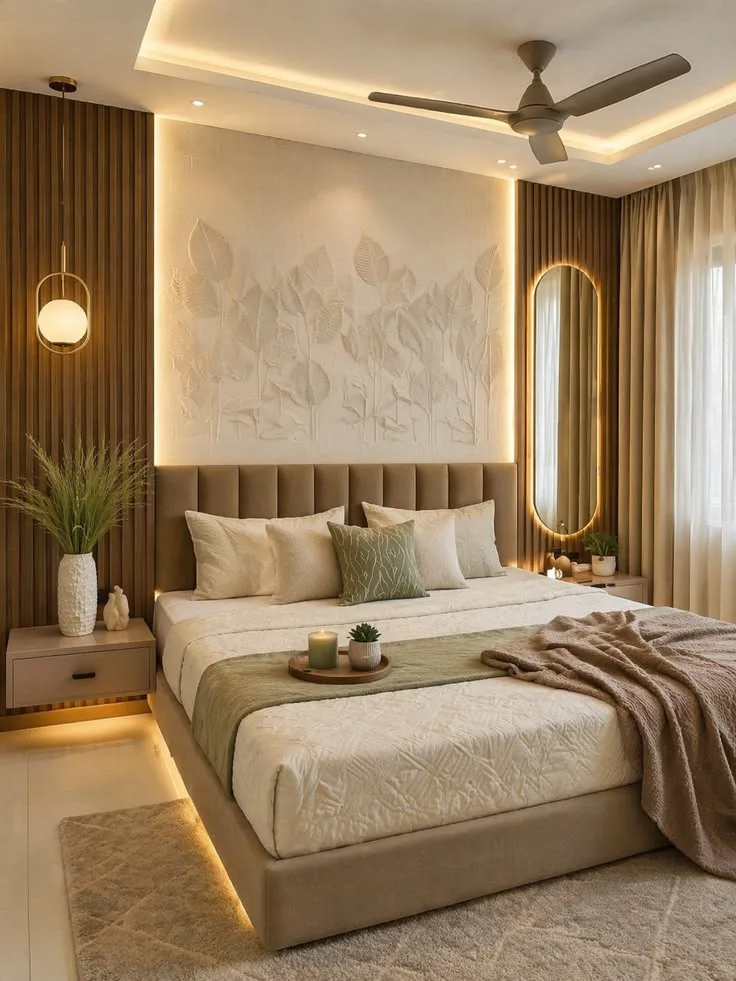
Sleeping position is, about the head, not the face. Place the bed so the head points south or west. Sleeping with the head toward the north is generally discouraged in Vastu.
Master bedroom: Prefer the southwest. It is treated as a stable, heavy zone suited to the head of the household. Keep the bed on the south or west wall of that room when furniture layout allows.
Children’s or guest rooms: Northwest or west rooms often work well. A southeast bedroom can feel restless for long-term sleep because of fire energy, so use it carefully if the plan forces that choice.
When you are setting up your home try not to put a mirror in front of the bed. It is better to put wardrobes on the west or south walls.Electronics and study desks for children can face east or north for focus during work hours.
Staircase, Bathroom, and Utility Placement
Staircase: Prefer the south, southwest, or west for the stair core. A clockwise rise as you go up is commonly recommended. Avoid a staircase that begins in the northeast or sits on the Brahmasthan. Keep the area under the stairs from becoming a dark dump of unused junk.
Bathrooms and toilets: Northwest or southeast-adjacent wet areas are more acceptable than northeast toilets. A southwest toilet is also treated as problematic for long-term comfort in many readings. For fixture-level detail, see Vastu for bathrooms and everyday living (https://asbl.in/blog/vastu-bathroom-aligning-tradition-with-everyday-living/).
Utility and water: Overhead or ground water storage is traditionally better toward the northeast or north than the southwest. A southwest water tank is a classic dosha in east-facing homes. Laundry and service yards can sit toward the west or northwest if drainage is clean and odour is controlled.
Septic tanks and underground sumps need municipal clearance first. Vastu preference cannot override sanitation rules.
Applying East-Facing Vastu to a Flat or Apartment
Yes, with limits. In an east facing flat vastu apartment, you usually cannot move the kitchen shaft, toilet ducts, or main entrance corridor. You can still improve how the home feels and functions.
What you can still control:
| Element | Apartment-friendly action |
|---|---|
| Entrance | Keep the door area bright; place a clean nameplate; avoid shoe clutter |
| Living furniture | Seat people facing north or east where possible |
| Bedroom | Head to south or west; avoid north-head sleep |
| Kitchen use | Cook facing east if the platform allows; keep northeast counter clear of heavy storage |
| Pooja | Create a northeast shelf or corner unit if a full room is missing |
| Mirrors | Do not place a large mirror directly opposite the flat entrance |
| Plants and light | Keep balconies and northeast corners uncluttered |
Tower-level constraints matter. If your flat door opens from a corridor on the east side of the wing, treat that door as your Vastu entrance even when the tower’s compound gate faces another direction. Compound orientation and flat orientation are not always the same.
Buyers comparing inventories should ask which side of the tower the unit sits on, not only whether the brochure says “east-facing community.”
Common Doshas in East-Facing Homes, and How to Fix Them
Ideal plans are rare. Remedies help when structure is fixed.
| Dosha | Why it is flagged | Practical remedy |
|---|---|---|
| Mirror facing the main door | Reflects energy back out of the home | Move the mirror to a side wall; avoid direct door reflection |
| Water tank in the southwest | Heavy water in a zone meant for stability | Relocate if possible; if not, keep the tank clean and place a copper coin inside as a commonly suggested compensatory step |
| Cluttered northeast | Blocks the most sensitive light zone | Clear storage; use light colours; keep the floor visible |
| Bed with head to the north | Against preferred sleep orientation | Rotate the bed so the head faces south or west |
| Toilet in the northeast | Mixes waste with the sacred water zone | Keep the door closed; use exhaust; place a Vastu strip or salt remedies only as secondary measures; plan renovation if rebuilding |
| Kitchen in the northeast | Fire in a water-dominant corner | Shift cooking to southeast if remodelling; otherwise keep flames minimal and northeast counters free of stove |
| South-facing door pada on an otherwise east plot | Secondary opening on a less preferred stretch | Use the east door as primary; keep the south opening as exit or service only when possible |
Remedies should stay proportionate. A copper coin does not rebuild a wrong kitchen. Structural corrections during design beat symbolic fixes after possession. For people who live in apartments or built houses there are things you can do to make your space work better. If you have an east-facing house there are a things you should avoid:
- Do not block the part of your house.
- Avoid putting your master bedroom in the northeast.
- Do not put your kitchen in the northeast either.
- Try not to have your door facing a wall with a toilet on it.
- When you sleep do not have your head pointing north.
- Also try not to clutter the side of your house with too much storage because that can stop the morning sunlight from coming in.
Do’s and Don’ts at a Glance
Do’s
- Place the main door on a favourable east-wall pada (commonly 4th or 5th) and confirm with a consultant for your plot.
- Keep the northeast open, clean, and well lit.
- Put the kitchen in the southeast and cook facing east when possible.
- Keep the pooja in the northeast.
- Place the master bedroom in the southwest.
- Sleep with the head toward south or west.
- Use clockwise stairs in the south, southwest, or west.
- In flats, improve what you can: furniture, sleep direction, entrance clarity, and clutter control.
Don’ts
- Do not treat one pada number as sacred without checking your exact wall divisions.
- Do not place a mirror directly opposite the main door.
- Do not park a water tank in the southwest if another zone is available.
- Do not sleep with the head toward the north.
- Do not put the toilet or kitchen in the northeast when you still control the plan.
- Do not leave the Brahmasthan packed with heavy storage.
- Do not assume apartment compound gates define your flat’s Vastu orientation.
Key Takeaways
- East-facing homes are really great because the morning sun is good for your health and it helps you feel fresh and ready to go.. The way you lay out your rooms is what really matters in the end.
- When it comes to your door people usually say it should be on the 4th or 5th part of the east wall.. It is a good idea to check your site plan to make sure.
- If you have a house that’s 30×40 you can use the east side for the entrance put a northeast pooja room have a kitchen in the southeast a master bedroom in the southwest and leave the northeast corner empty.
- When you sleep it is better to have your head pointing south or west not north.
- Even if you live in an apartment and cannot move the walls you can still use Vastu principles by arranging your furniture and using the rooms in a way.
- There are some problems that can happen like having a mirror on the door a tank in the southwest or a cluttered northeast corner.. These problems often have simple solutions that do not require major changes.