Kitchen Vastu: Stove, Sink & Layout for Prosperity (2026 Guide)
Quick Answer
Kitchen Vastu recommends the southeast as the ideal kitchen direction, with northwest as a suitable alternative. The stove should ideally be placed in the southeast with the cook facing east, while the sink is preferred in the north or northeast. Keeping a 2–3 ft gap between the stove and sink helps maintain separation between fire and water elements. For apartments with fixed layouts, simple internal adjustments can still improve Vastu alignment.
A kitchen does more than feed a family. In Vastu Shastra, the traditional Indian system of design, it ranks among the most important rooms in a home, tied closely to health, wealth, and daily harmony. That is largely because a kitchen brings fire and water together in one space. Vastu treats these two elements as natural opposites. Getting their placement right, along with the kitchen’s direction and colour scheme, forms the core of kitchen Vastu, and none of it requires demolishing a wall. Anyone still working through a broader home layout can check ASBL’s guide on Vastu tips for a new home, which covers the wider picture beyond the kitchen alone. This guide stays focused on the stove, the sink, and the layout choices around them.
Why Kitchen Vastu Matters for Health and Prosperity
Kitchen Vastu isn’t only about tradition for its own sake. It links the kitchen closely to two things: the health of the people eating from it, and the financial stability of the household. Food and money both count as forms of nourishment in this system, and a kitchen placed and arranged well is believed to support both.
Beyond the belief system, some of this logic holds up on a fairly practical level too. Keeping fire and water sources apart, for instance, is simply safer during daily cooking. A well-planned slab and storage layout also makes cooking easier, whatever your view of the underlying tradition.
The Ideal Kitchen Direction: Southeast and Its Alternatives
Vastu names the southeast corner of a home as the ideal spot for a kitchen, calling this zone the Agni Kona, or fire corner, and linking it to the fire element itself. A kitchen placed here is said to support better health and steadier prosperity for the household.
Be Among the First to Own a Legacy
Northwest ranks as a solid second choice when southeast isn’t available. Vastu generally advises against placing a kitchen in the northeast, since this zone carries water and calm energy, a poor match for fire. The southwest and the true north are usually avoided too, since Vastu links southwest to stability and true north to wealth, and fire is thought to disturb both.
A north-facing house causes some confusion here, since homeowners sometimes assume the kitchen has to sit in the north itself. That isn’t the case. A house’s facing direction only describes which way the main entrance points, not where individual rooms should sit inside it. This holds even for a north-facing plot, which can still place its kitchen in the southeast or northwest zone, exactly as any other plot would.
Stove Placement and Cooking Direction as per Vastu
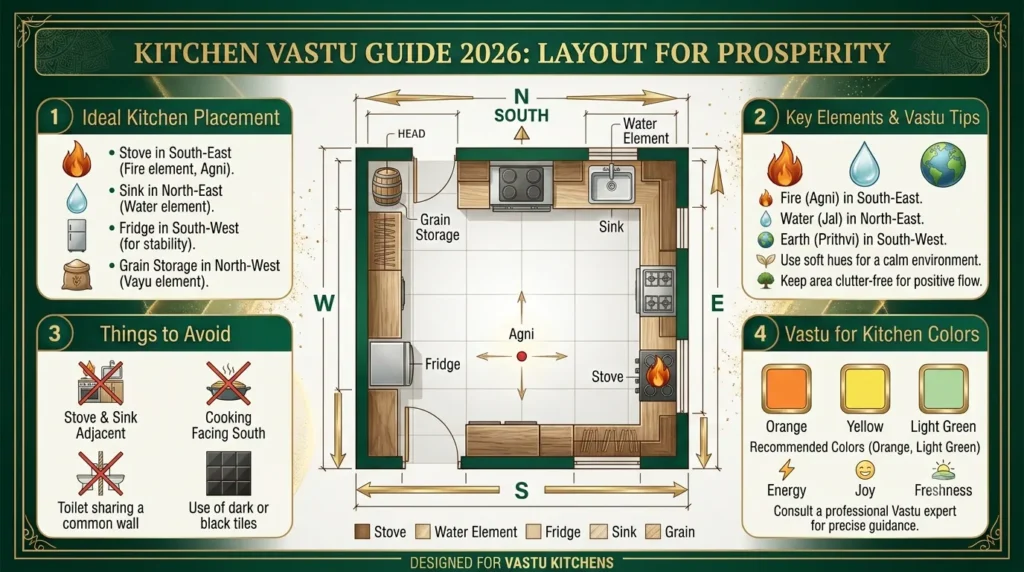
Within the kitchen itself, the stove deserves the most careful placement of any single item. Vastu recommends positioning it in the southeast corner of the room, regardless of which direction the kitchen as a whole faces. The person cooking should stand facing east, a direction believed to support good health and positive energy while preparing food.
A few placement details matter beyond direction. The stove should never sit directly opposite the kitchen door, nor directly under an exposed beam or window. It should also stay out of direct view from the home’s main entrance. Vastu holds that a stove visible right from the front door drains the household’s prosperity.(Source)
Kitchen Sink Direction and Why It Should Be Away from the Stove
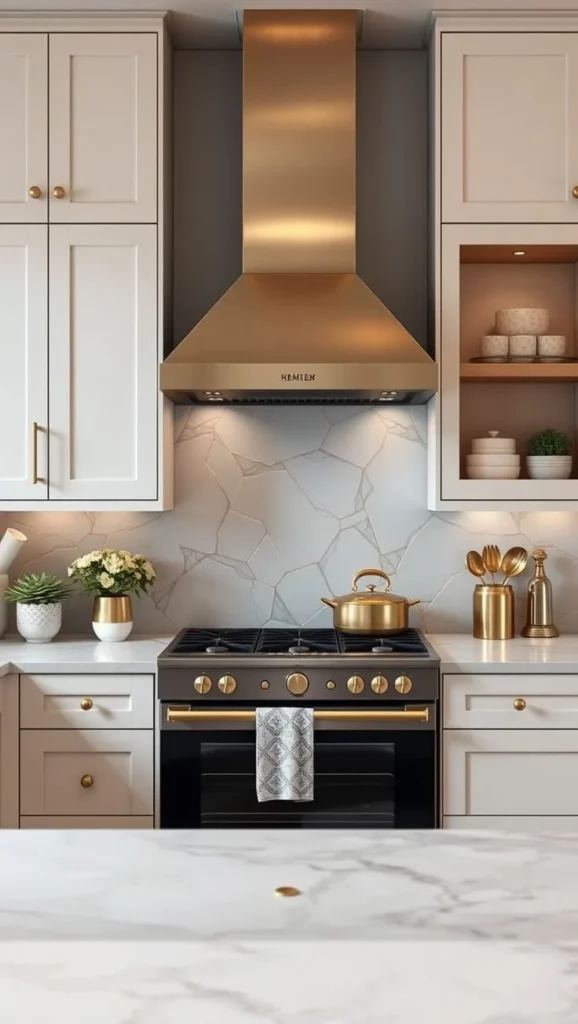
The kitchen sink works best in the north or northeast corner of the room, a zone Vastu treats as naturally suited to the water element. This keeps the sink well clear of the stove’s fire energy.
Fire and water, though, count as opposing elements in Vastu. Placing the stove and sink too close together is thought to create a quiet conflict between the two. Vastu generally recommends a gap of at least two to three feet between them, whether they sit on the same counter or face each other across the room. The same logic applies to the refrigerator, which works better in the northwest or southwest corner than right beside the stove.
Planning the Layout: Slabs, Storage, and Appliance Zones
Beyond the stove and sink, the rest of the kitchen benefits from a similar zone-by-zone approach. The cooking slab generally runs along the south or west wall, keeping the stove within reach of the southeast corner. Heavy storage, such as grain containers and bulk supplies, suits the southwest, since Vastu links this zone to stability and weight. Kitchen size and shape often shift with the home’s overall configuration too. This is worth weighing alongside ASBL’s comparison of 2 BHK vs 3 BHK homes if you are still choosing between the two.
Lighter storage, crockery, and everyday cabinets work well along the south or west walls. A water purifier or storage container fits naturally into the northeast, near the sink. None of this needs to be exact to the inch. It simply gives a sensible starting point for anyone sketching out a kitchen layout with an architect or interior designer. ASBL’s interior design checklist for new homes covers this step in more depth.
What to Do If Your Kitchen Layout Isn’t Vastu-Compliant
Most homeowners, especially apartment buyers in a city like Hyderabad, do not get to choose their kitchen’s direction from scratch. That is completely normal, and it does not rule out good kitchen Vastu.
The position of the stove and sink within the room matters more than the room’s overall direction. Focus first on getting the stove into the southeast corner of the kitchen itself, and keep a clear gap from the sink. This works even if the kitchen as a whole sits elsewhere. Cooking while facing east remains possible in almost any kitchen layout, regardless of the room’s placement.
A few remedies help further. Painting the kitchen in warm, fire-friendly tones can offset a less-than-ideal direction. Some homeowners also place a small mirror behind or beside the stove. This is a common Vastu remedy, believed to symbolically double the household’s abundance. It should never reflect the sink or any water source directly, though.
Vastu-Recommended Colours and Materials for the Kitchen
Colour follows the same fire-element logic as placement. Warm, energising tones such as white, soft yellow, orange, or light terracotta suit a kitchen well. Vastu links them to the fire element and to positive, active energy.
Black and dark blue generally don’t suit kitchen walls, since Vastu links both to water, a mismatch for a fire-dominated room. Materials follow a similar pattern. Natural surfaces like wood, granite, or clay tend to feel more balanced than heavy glass or reflective metal. Stainless steel, though, remains a practical, widely accepted choice for sinks and appliances.
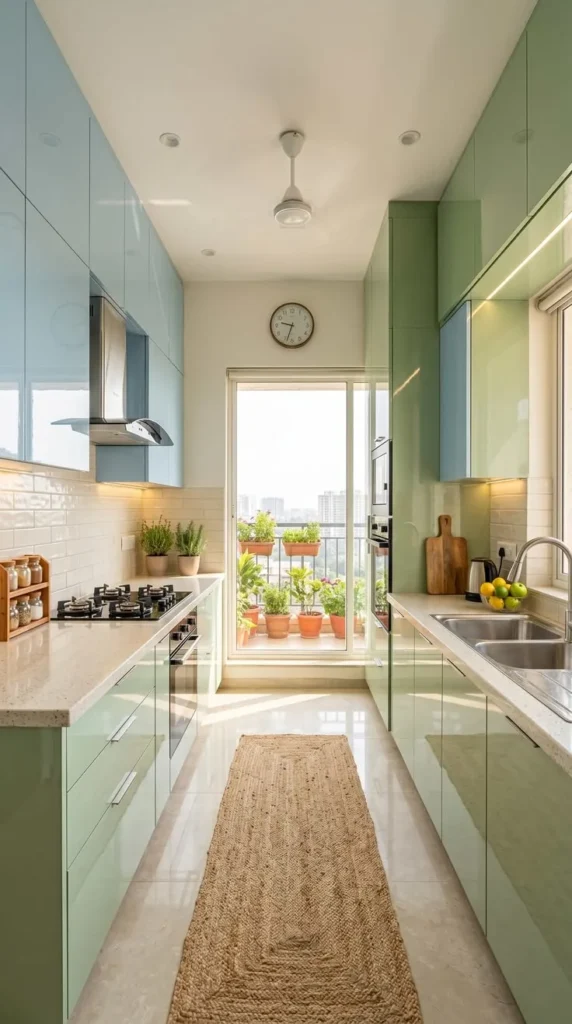
Kitchen Vastu Do’s and Don’ts at a Glance
Do’s
- Place the stove in the southeast corner of the kitchen, and cook facing east.
- Keep at least a two to three foot gap between the stove and the sink.
- Position the sink in the north or northeast corner of the room.
- Use warm tones like white, yellow, or terracotta on kitchen walls.
Don’ts
- Place the kitchen itself in the northeast corner of the home.
- Position the stove directly opposite the kitchen door or under a beam.
- Place the sink and stove right next to each other or in a straight line.
- Rely on heavy black or dark blue shades for kitchen walls.
Key Takeaways
- The southeast corner works best for a kitchen, with northwest as a solid second choice, while northeast, southwest, and true north are best avoided.
- Vastu recommends the stove in the southeast corner of the kitchen, with the cook facing east while preparing food.
- The sink works best in the north or northeast, kept at least two to three feet from the stove to separate fire and water.
- A north-facing house does not force the kitchen into the north zone, since internal room placement follows its own logic.
- If the layout can’t change, focus on the stove and sink’s position within the room, plus colour, rather than the kitchen’s overall direction.
- Warm tones like white, yellow, and terracotta suit a kitchen, while black and dark blue are best kept to a minimum.