Main Door Vastu: Best Direction, Colour & Layout for Positive Energy
Quick Answer
Main Door Vastu focuses on the entrance direction, door colour, design and the space around it. North, northeast and east are considered favourable directions, while southeast is generally avoided where a choice exists. The right colour can be selected based on the door’s direction, while a clean, well-lit entrance and practical remedies can help balance fixed or less favourable layouts.
Walk into most Hyderabad homes and you’ll notice the main door gets more thought than almost any other single element, the colour, the design, sometimes even the exact placement of the doorbell. This isn’t superstition for its own sake. In Vastu Shastra, the main door is considered the point where energy, light, and opportunity enter a home, and getting it right is one of the more approachable ways to apply these principles without a major renovation. This guide covers direction, colour, and layout together, along with practical fixes for the many Hyderabad apartments where the ideal direction simply isn’t an option.
Why the Main Door Matters Most in Vastu Shastra
In Vastu tradition, the main door, sometimes called the Simha Dwar or main entrance, is treated as the primary channel through which energy flows into a home. Everything that enters, guests, sunlight, and by extension, prosperity and wellbeing, is believed to pass through this one point first.
This is precisely why Vastu places so much emphasis on the door’s direction, colour, and condition compared to other parts of a home. A well-placed, well-maintained entrance is thought to invite positive energy in freely, while a poorly placed or neglected one can restrict it. Whether or not this resonates with you personally, it’s a useful lens for thinking about entrance design more broadly, since a bright, welcoming, clutter-free entrance tends to set the tone for a home regardless of which belief system you follow.
Be Among the First to Own a Legacy
Best Direction for the Main Door: North, Northeast, and East
Vastu consistently points to three directions as the most favourable for a main door, and each carries its own specific reasoning.
North-facing doors are associated with Kubera, the deity of wealth in Hindu tradition, and are considered excellent for inviting financial prosperity and stability into a home. Northeast-facing doors are perhaps the most highly regarded of all, since this direction is linked to spiritual energy and general auspiciousness, believed to support clarity, peace, and overall wellbeing for the household. East-facing doors are valued for a more practical reason too: they allow the home to catch the morning sun directly, which Vastu associates with health, vitality, and fresh energy entering the home each day.
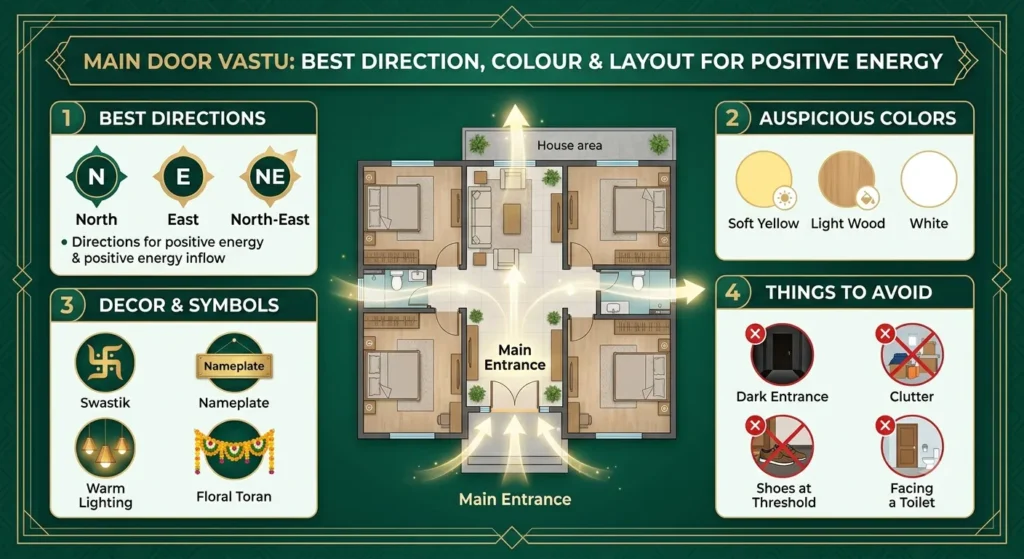
For anyone with genuine flexibility in choosing their home’s orientation, whether building independently or selecting from multiple unit options in a project, these three directions are the ones worth prioritising first.(Source)
Directions to Avoid and Why
Just as some directions are favoured, Vastu identifies others as best avoided where a choice genuinely exists.
Southeast-facing doors are generally considered the least favourable, associated with the fire element in Vastu, believed to bring instability, conflict, or financial strain if not properly balanced. South-facing doors are often approached with more caution too, though this direction is considered workable with the right remedies, unlike southeast, which is typically avoided outright wherever an alternative exists.
It’s worth being clear that “avoid” doesn’t mean these directions are unlivable. Millions of homes across India have south or southeast-facing entrances and function perfectly well. Vastu simply suggests these directions require more deliberate balancing, through colour, layout, and specific remedies, to work as smoothly as a north, northeast, or east-facing entrance would by default.
Choosing the Right Colour Based on Door Direction
Colour is one of the simplest, most immediately actionable ways to apply Vastu principles to an entrance, since it doesn’t require any structural change.
| Door Direction | Recommended Colours | Colours to Avoid |
|---|---|---|
| North | Blue, green | Black, dark grey |
| Northeast | Yellow, cream, light shades | Red, black |
| East | White, light blue, silver | Dark or overly bold shades |
| South | Orange, red, maroon (used carefully) | Blue, black |
| West | White, grey, cream | Bright red |
| Southeast | Silver, white, light grey | Black, dark blue |
A general rule cuts across every direction: black is best avoided as the primary door colour, regardless of orientation, as it is traditionally associated with negativity and heaviness in Vastu. Instead, brighter, warmer, or naturally reflective shades are generally preferred. However, Vastu also associates specific colours with different directions based on their elemental and energetic qualities. White, light blue and green are often recommended for north-facing entrances; green and earthy tones for east; red, orange and other warm shades for south; and yellow, beige or earthy tones for west-facing entrances. Choosing colours that align with the direction is traditionally believed to enhance its positive qualities and create greater balance within the home.
Design, Size, and Layout Guidelines for the Entrance
Beyond direction and colour, several practical layout principles shape how a main door is meant to function within Vastu tradition.
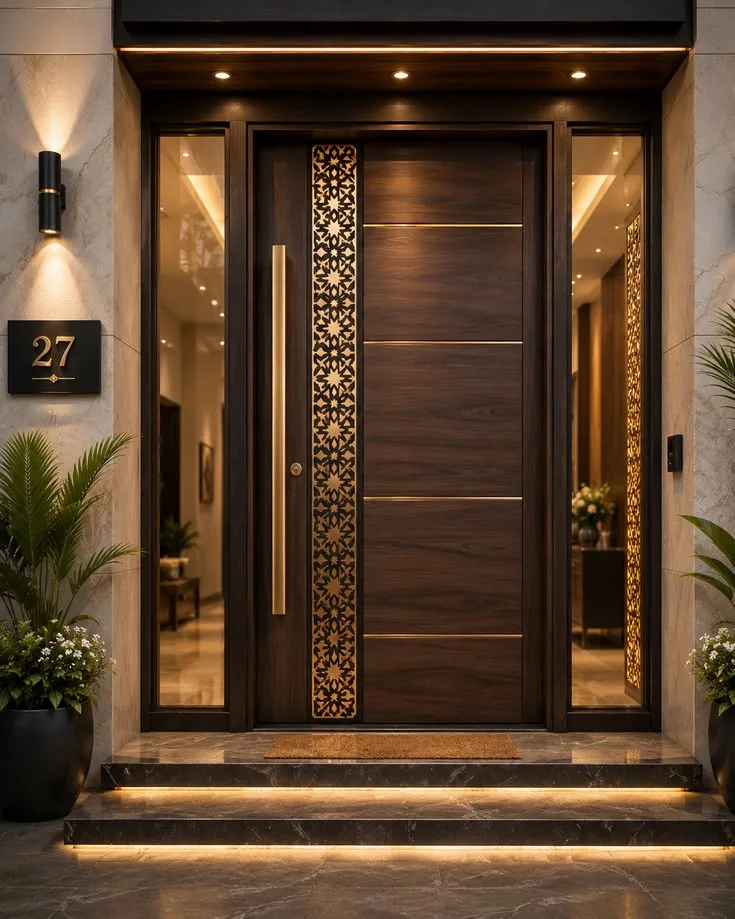
The door should ideally be the largest door in the house, both taller and wider than any internal door, symbolically establishing it as the primary point of entry and energy flow. It should open inward, and ideally in a clockwise direction, since this is believed to draw positive energy and opportunity into the home rather than push it back outward. The threshold should be kept in good condition, free of cracks or damage, since a broken or uneven threshold is considered to disrupt the smooth flow of energy across it.
The area immediately surrounding the entrance matters just as much as the door itself. Keep the space well lit, both naturally where possible and with adequate lighting fixtures for evening hours, and keep it genuinely clutter free, since shoes piled up, stored items, or blocked pathways are all thought to obstruct the energy the door is meant to welcome in. A doormat at the threshold is considered a small but meaningful addition, symbolically wiping away negative energy before it enters the home.
What to Do If Your Main Door Isn’t in an Ideal Direction
This is the section most Hyderabad apartment buyers actually need, since choosing your unit’s exact door direction usually isn’t realistic in a multi-storey building with a fixed floor plan. The good news is that Vastu offers genuine remedies for a fixed, non-ideal entrance, rather than treating the situation as unfixable.
Start with colour, since repainting a door is the easiest change available and can meaningfully shift how the entrance is balanced according to its actual direction, using the reference table above. Placing a Ganesha idol or image directly above the main door, facing outward, is one of the most common remedies across Vastu practice, believed to help neutralise unfavourable energy regardless of the door’s orientation. Keeping the entrance well lit and clutter free matters even more for a less favourable direction, since a bright, open entrance is thought to help offset some of the direction’s inherent challenges.
A mirror should never be placed directly facing the main door, since Vastu holds that this reflects incoming positive energy straight back out before it can enter the home, a mistake covered in more detail in the next section. Small design choices, a fresh doormat, a healthy plant near the entrance, or wind chimes, are also commonly used as gentle, low-effort balancing elements for a fixed direction. For a broader look at applying these principles across your entire home, not just the entrance, our guide on Vastu tips for a new home in Hyderabad is a useful next read.
Common Main Door Vastu Mistakes to Avoid
A handful of entrance mistakes show up repeatedly, and most are genuinely easy to fix once you know to look for them.
A mirror facing the main door is one of the most commonly cited errors, believed to send positive energy back out the way it came rather than letting it settle into the home. A broken or damaged threshold is another, since cracks or unevenness at this exact point are thought to disrupt the smooth entry of energy the door is meant to allow.
Shoes and clutter piled at the entrance block both the physical and symbolic pathway into the home, undermining even a well-directioned, well-coloured door. A squeaky or stiff door that doesn’t open smoothly is considered to represent friction and obstruction in the household’s fortunes, and is worth fixing for entirely practical reasons too. Dim or broken entrance lighting is a smaller but frequently overlooked issue, since a dark entrance is thought to dampen the positive energy a door is meant to welcome in.
None of these fixes require major renovation. Most are a weekend’s worth of small, deliberate changes, which is part of why the main door remains one of the more approachable places to apply Vastu principles in an existing home. If you’re finalising your broader entrance and interior setup before moving in, our interior design checklist for before you move into your new home is worth working through alongside these entrance-specific fixes, and our guide to kitchen Vastu for stove and sink layout covers the next room most buyers ask about after the entrance.