Freehold vs Leasehold property: Which Should You Buy?
Quick Answer
Freehold gives buyers ownership of the property and its associated land interest, while leasehold grants the right to use the property for a specified period without transferring ownership of the land. Most private apartments in Hyderabad are sold as freehold with an undivided share of land (UDS), whereas leasehold properties are subject to a fixed tenure and conditions governing transfer, mortgage and renewal.
If two flats look identical, cost almost the same, and sit in the same part of the city, could one of them still come with an expiry date?
Surprisingly, the answer can be yes. The difference lies in the type of title behind each home. One buyer may own the property interest outright, while another may hold only a right to use it for a fixed number of years. In daily life the two homes may feel the same, yet they behave very differently when the owner wants to sell, take a loan, or pass the home to their children.
Many online comparisons add to the confusion. Some claim that all Indian flats are leasehold, an idea borrowed from the United Kingdom or from certain society structures in other states. For a typical private apartment in Hyderabad, however, that claim does not hold.
For buyers in their 30s to 50s, this question shapes the long-term security of the family’s largest asset. This guide therefore explains what each term means under Indian law, what to look for in the deed, when leasehold can still work, and where leasehold actually appears in Hyderabad.
Live Where You Work | Spacious 3 BHKs in the Heart of the Financial District| Ready to move-in | From ₹1.99 Cr .
Freehold vs Leasehold in One Sentence
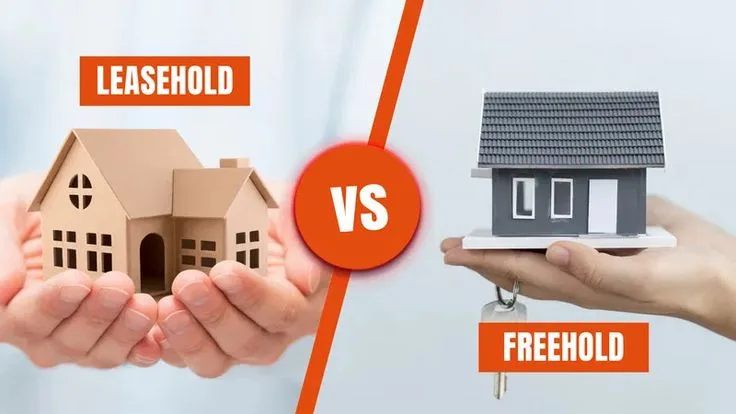
In simple terms, freehold means owning the property interest, while leasehold means holding a timed right to enjoy someone else’s property.
Section 105 of the Transfer of Property Act, 1882, defines a lease as a transfer of a right to enjoy immovable property for a certain time, or in perpetuity, in return for rent or a premium. Under a lease, the lessor keeps ownership of that interest. A freehold home, by contrast, passes to the buyer through a registered sale deed, which transfers the owner’s interest itself.
| Feature | Freehold | Leasehold |
|---|---|---|
| What the buyer holds | The ownership interest | A right to use the property for a set term |
| Who keeps ownership | The buyer | The lessor |
| Time limit | None | Fixed by the lease deed |
| Transfer and mortgage | Generally free, subject to law | Often needs the lessor’s consent |
| Main document | Registered sale deed | Registered lease or sub-lease deed |
Registration matters for leases too. Under Section 17(1)(d) of the Registration Act, 1908, leases from year to year, for more than one year, or reserving a yearly rent must be registered. Furthermore, Section 49 of the same Act states that an unregistered document that legally requires registration does not affect the property.
It also helps to separate three things that people often mix up:
| Arrangement | What it is |
|---|---|
| Rental tenancy or leave and licence | A rental arrangement to live in someone else’s home |
| Title lease from a government body or authority | A long-term lease of land from an authority such as a development body or cantonment |
| A “99-year” marketing line on a freehold project | A sales phrase that does not change a freehold title |
ASBL’s guide to real estate terms explains other common property terms.
Are Indian Apartments Automatically Leasehold?
No. Private gated apartments built on titled private land in Hyderabad are usually sold as freehold. The buyer receives a registered sale deed for the flat along with an undivided share of land (UDS), which is the buyer’s fraction of the plot on which the building stands.
UDS is not a lease. It represents a share in the land that passes with a freehold apartment. Similarly, the residents’ association, its by-laws, and the monthly maintenance charges do not turn a freehold flat into a leasehold one.(Source)
The idea that “all flats are leasehold” comes from other settings, such as UK property law or the society conveyance process common in Maharashtra. The article on the conveyance deed for housing societies covers that separate issue. Likewise, an older ASBL post on flat lease durations and resale value discusses leasehold flats, although a typical Hyderabad private apartment usually transfers freehold title with UDS instead.
The safest approach, therefore, is simple: on a typical Hyderabad private apartment, the buyer reads the sale deed for the unit and the undivided land share. If the land is held on a government lease, the deed will say so.
What to Read in the Deed in 10 Minutes
A buyer does not need legal training to spot the basic type of title. A careful ten-minute reading of the deed answers most questions.
| What to check | What it tells the buyer |
|---|---|
| Title of the document | Whether it is a sale deed, a lease deed, or a sub-lease deed |
| Name of the transferor | Whether the seller owns the property or holds it as a lessee |
| Lessor’s name, if any | Which government body, authority, or private owner holds the land |
| Start and end dates | How many years remain on any lease |
| Ground rent | Any yearly payment the lessee must make to the lessor |
| Mortgage and transfer clause | Whether the lessor’s consent is needed to sell or take a loan |
| UDS description | The share of land that passes with the apartment |
Alongside the deed, the encumbrance certificate helps confirm the chain of past transactions. For projects under construction, the land title details also appear in the RERA filing and the agreement for sale, so the buyer can read them there as well. ASBL’s guide on how to read a sale deed walks through the full document.
Which One Should You Buy?
For most end users buying a home in Hyderabad’s private housing market, freehold offers the clearer choice. It allows the owner to sell, gift, pass on, and mortgage the home without needing a lessor’s permission.
A leasehold home can still work, but only when all five of these conditions hold:
- The lease or sub-lease is registered in the seller’s name.
- The remaining term comfortably outlasts the home loan the buyer needs.
- The lessor permits mortgage and transfer in writing.
- Ground rent and any past breaches are clear, with no unresolved violations.
- The price reflects the lease, meaning it sits below a comparable freehold home even after counting the cost of conversion under a live scheme. If conversion is “on hold” or only under committee review, the buyer should not count on it.
Two further points deserve attention. First, a buyer should never purchase a leasehold home expecting the lease to convert someday. When a lease ends without renewal or conversion, the interest returns to the lessor under the terms of the deed, and no India-wide law grants an automatic right to convert. Second, a brochure label alone proves nothing. If a seller markets leasehold land as freehold, the buyer faces a title defect, so verifying the deed always comes before paying any premium.
Home Loans on Leasehold: Remaining Term, Not Slogans
Banks and housing finance companies do lend on leasehold homes. However, they look closely at how many years remain on the lease compared with the loan tenure. They usually ask for the lessor’s permission to mortgage, and in some cases they may need a tripartite agreement with the authority. RBI’s loan-to-value limits remain the same as for freehold homes.
The remaining term often decides the outcome. Some lenders’ published guidance notes difficulty in lending when fewer than about 30 years remain on a lease. This reflects lender practice rather than an RBI rule, so a buyer can confirm the position with the lender directly.
A simple illustration: Consider three 99-year leases, each assessed in 2026.
| Lease start | Lease end | Years remaining in 2026 | Effect on a 20-year loan |
|---|---|---|---|
| 1980 | 2079 | 53 | Lease comfortably outlasts the loan |
| 1960 | 2059 | 33 | Loan fits, but with a narrow margin |
| 1950 | 2049 | 23 | Lenders may shorten or decline the loan |
In the last case, the buyer could struggle to borrow, and future buyers would face the same problem, which also affects resale.
Conversion Is a Scheme, Not a Right
Many buyers hope to convert a leasehold home into freehold later. In practice, conversion depends entirely on whether the lessor runs a live scheme, and on that scheme’s conditions.
Government leases follow their own rules. The Government Grants Act, 1895, provides that the Transfer of Property Act does not override the terms of a government grant. The Supreme Court confirmed this approach for nazul leases in State of U.P. v. United Bank of India (2016) 2 SCC 757, holding that such leases follow the terms of the grant.
| Authority or area | Status of conversion |
|---|---|
| Delhi Development Authority | DDA’s own brochure described conversion as optional. A written government reply to the Rajya Sabha in August 2026, as reported in the news, said conversion requests were on hold pending a policy review |
| Secunderabad area (state scheme) | G.O.Ms.No.816 of 9 August 1994 offered optional conversion on notified charges, which the High Court has treated as a scheme with conditions |
| Secunderabad Cantonment (Class B-3) | Rule 39A of the Cantonment Land Administration Rules, 2021, allows the Centre to frame a conversion policy, but this does not create automatic title |
| Telangana committee | G.O.Rt.No.564 set up a committee whose terms of reference include leasehold-to-freehold conversion in the Secunderabad area; a committee is not a conversion deed |
Since each scheme sets its own charges and conditions, a buyer should never rely on old rates or assume a fee. Checking with the relevant authority before buying offers the only reliable answer.
Hyderabad Exceptions: Cantonment, Old Grants, Authority Land
Although most private apartments in Hyderabad are freehold, leasehold does appear in a few specific situations:
| Where leasehold appears | What it involves |
|---|---|
| Old government or nazul leases | Land held under a government grant |
| Some housing board or authority allotments | Homes allotted under the authority’s lease terms |
| Industrial land | Plots under industrial development schemes, not typical homes |
| Secunderabad Cantonment Class B-3 and old-grant plots | Land managed by Defence Estates, where conversion remains a policy matter |
For the cantonment, the Directorate General Defense Estates (DGDE) lists the conversion of old-grant and leasehold land in civil and bazaar areas as a policy function, which means it has not delivered a city-wide freehold conversion. Similarly, a 2022 order regularizing certain GHMC staff quarters colonies applied only to those named colonies and does not create a general conversion scheme for private buyers.
What This Is Not
To keep the comparison clear, this guide does not cover several related topics:
- Rental leases or leave-and-license agreements, which govern tenants rather than owners.
- Joint development agreements, where the landowner and developer share a project. In those projects, the buyer follows a different title path, which ASBL’s guide to joint development agreements explains.
- Prohibited-property lists or assigned land, which fall under separate laws.
- Society conveyance delays in other states, which raise a different problem from Hyderabad’s UDS sale model.
Do’s
- Read the deed to confirm sale, lease, or sub-lease
- Confirm the UDS in a freehold apartment deed
- Check the years remaining on any lease
- Get the lessor’s written consent to mortgage and sell
- Treat conversion as possible only under a live scheme
- Check RERA filings for land title details
Don’ts
- Trust a brochure label without checking the deed
- Assume every flat in India is leasehold
- Buy the final decades of a lease as if it were a sale
- Assume a lender will finance any lease term
- Pay extra hoping for future conversion
- Rely on old conversion rates or informal advice
Key Takeaways
- Freehold means owning the property interest, while leasehold is a timed right to use it under Section 105 of the Transfer of Property Act.
- Most private apartments in Hyderabad transfer freehold title along with an undivided share of land.
- UDS is not leasehold, and association rules do not change that.
- Leasehold can work only if five conditions hold, including a registered lease and a term longer than the loan.
- Lenders often hesitate when fewer than about 30 years remain on a lease, as a matter of practice.
- Conversion from leasehold to freehold depends on a live scheme, not a legal right.
- Leasehold in Hyderabad appears mainly in cantonment, old-grant, and authority land.