10 Vastu-Approved Plants for Your Apartment + Where to Place Them
Quick Answer
Vastu-approved plants can add greenery while traditionally supporting prosperity, calm and positive energy in a home. Money plant, tulsi, jade and lucky bamboo are among the recommended choices, with placement depending on the plant. For apartments, match the plant to the available light and direction, and avoid thorny, milky-sap, bonsai or unhealthy plants indoors.
Greenery does more than fill an empty corner. In Vastu Shastra, plants are believed to carry their own energy, some inviting prosperity, some bringing calm, and a few best kept out of the house entirely. For apartment residents without a garden or courtyard, the good news is that most of this guidance translates easily to a balcony, a window ledge, or a well-lit corner of the living room. Here are ten plants worth considering, exactly where to place them, and a few simple care tips to keep them thriving.
Why Plants Matter in Vastu Shastra
Vastu treats a home as a living system, where energy flows through every element, including the plants placed within it. A healthy, thriving plant is believed to support positive energy, prosperity, and calm in a household, while a neglected, wilting one is thought to do the opposite.
This is part of why Vastu is as specific about plant placement as it is about which plants to choose. The same money plant that’s considered auspicious in the southeast corner of a living room is thought to lose much of its benefit if placed carelessly elsewhere. For apartment residents, this specificity is actually useful, since it turns a fairly overwhelming decision, which plants to buy, into a much simpler one: a short list, each with a clear direction and spot to place it.
Be Among the First to Own a Legacy
Quick Reference: Plant, Direction, and Benefit at a Glance
| Plant | Best Direction | Key Benefit |
|---|---|---|
| Money Plant | Southeast | Prosperity, wealth |
| Tulsi (Holy Basil) | East or North | Purity, positive energy |
| Lucky Bamboo | Southeast | Luck, harmony |
| Areca Palm | East or North | Air purification, calm |
| Jade Plant | Southeast | Wealth, growth |
| Snake Plant | North | Air purification, protection |
| Peace Lily | North | Peace, reduced stress |
| Marigold | East, near entrance | Positivity, auspiciousness |
| Rubber Plant | Southeast or East | Absorbs negative energy |
| Aloe Vera | East | Healing, positive energy |
10 Vastu-Approved Plants and Where to Place Them
Money Plant. Widely considered the most popular Vastu plant, the money plant is associated with wealth and financial growth. Place it in the southeast corner of your living room, and train it to climb upward on a support rather than letting it trail along the floor, since upward growth is believed to matter as much as the direction itself.
Tulsi (Holy Basil). Tulsi holds a spiritual significance in Indian households that goes beyond Vastu alone, and it’s considered one of the purest plants a home can hold. Keep it in a pot on an east or north-facing balcony, where it gets direct morning sunlight, which it genuinely needs to thrive.
Lucky Bamboo. Associated with luck and harmony, lucky bamboo works well in either water or soil, making it a genuinely low-fuss option. Place it in the southeast corner of your living room or workspace, and choose stalks in odd numbers, commonly three, five, or seven, since these are considered more auspicious than even numbers.(Source)
Areca Palm. Valued both for its air-purifying qualities and its calming presence, the areca palm suits an east or north-facing spot with bright, indirect light. It works particularly well as a living room centrepiece, given its fuller, taller growth habit.
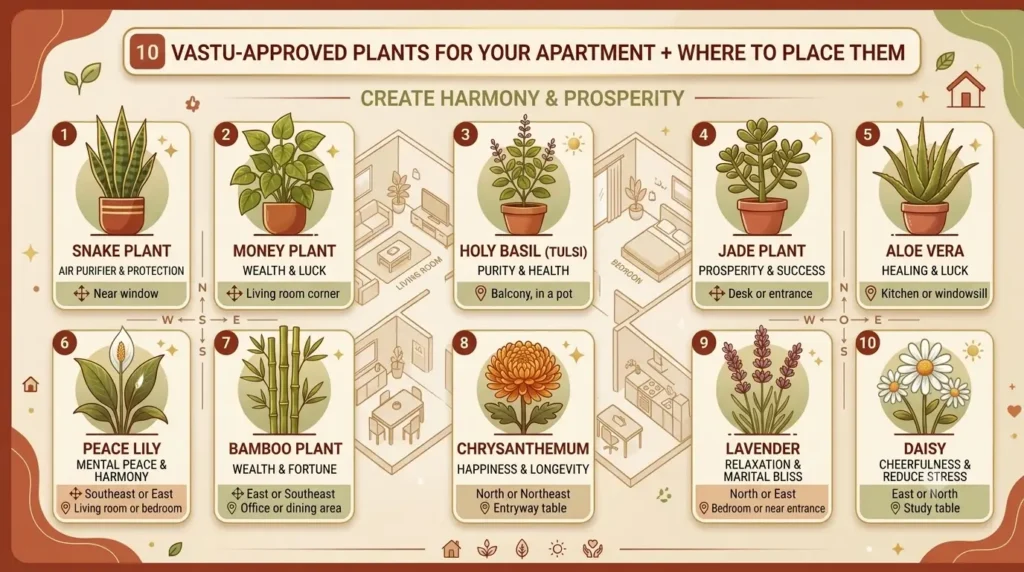
Jade Plant. With its round, coin-shaped leaves, jade is closely associated with wealth and growth in Vastu tradition. Place it in the southeast corner, ideally near an entrance or living room window, and expect it to need very little water, since it’s a genuine succulent.
Snake Plant. Known for tolerating low light and irregular watering better than almost any other houseplant, the snake plant is associated with protection and purification. It suits a north-facing spot, and works well in a bedroom or living room where air quality matters most.
Peace Lily. With its calming white blooms, the peace lily is associated with peace and reduced household stress. It prefers a north-facing spot with moderate, indirect light, and benefits from consistently moist, but not waterlogged, soil.
Marigold. A genuinely auspicious flower in Indian tradition, marigold is often placed near the entrance rather than deep inside the home. An east-facing balcony or window ledge suits it well, and it needs a good amount of direct sunlight to bloom properly.
Rubber Plant. With its broad, glossy leaves, the rubber plant is believed to absorb negative energy while purifying the air. Place it in the southeast or east part of your living room, somewhere it has room to grow, since it can reach a considerable height indoors over time.
Aloe Vera. Valued for its healing properties as much as its Vastu significance, aloe vera is associated with positive energy and protection. Keep it on an east-facing window ledge or balcony, where it gets bright light without being scorched by harsh afternoon sun.
Best Plants for Small Balconies and Window Ledges
Not every apartment has room for a fuller indoor plant, and several of the plants above genuinely thrive in a compact balcony or window-ledge setup instead.
Tulsi, marigold, and aloe vera are the strongest choices for a small, sunny balcony, since all three need real direct light to do well, something a balcony typically offers more of than an interior living room corner. Money plant and jade plant both adapt comfortably to a smaller pot on a window ledge, provided the spot still gets reasonable indirect light through the day. For a north-facing balcony that gets less direct sun, snake plant and peace lily are the more forgiving choices, since both tolerate lower light levels far better than sun-loving options like tulsi or marigold.
A simple rule of thumb for small spaces: match the plant’s light needs to what your specific balcony or ledge actually receives, rather than choosing based on Vastu direction alone. A north-facing spot with genuinely bright, if indirect, light can still support a sun-loving plant reasonably well, while a shaded, closed-in balcony calls for the more shade-tolerant options regardless of which direction it technically faces.
Plants to Avoid Indoors as per Vastu
Just as some plants are considered auspicious, a handful are generally advised against inside the home, and it’s worth knowing which ones before you bring something home on impulse.
Thorny plants, cactus chief among them, are generally kept outside the home rather than indoors, since their sharp thorns are believed to bring tension, conflict, and sharp negative energy into a household. Plants with milky sap, certain succulents and euphorbias among them, are similarly advised against indoors, associated with financial instability and discord in Vastu tradition. Bonsai trees, despite their popularity as decor, are often discouraged too, since their deliberately stunted growth is thought to symbolically stunt the growth and progress of the household that keeps them. Dried, dead, or consistently wilting plants are considered inauspicious regardless of species, a point worth remembering even for plants that are otherwise Vastu-approved, covered in more detail below.
None of this means a cactus lover needs to give up the hobby entirely. Many of these plants are considered perfectly fine on an outdoor balcony ledge or garden space, just not within the home’s main living areas.(Source)
Simple Care Tips to Keep Your Vastu Plants Thriving
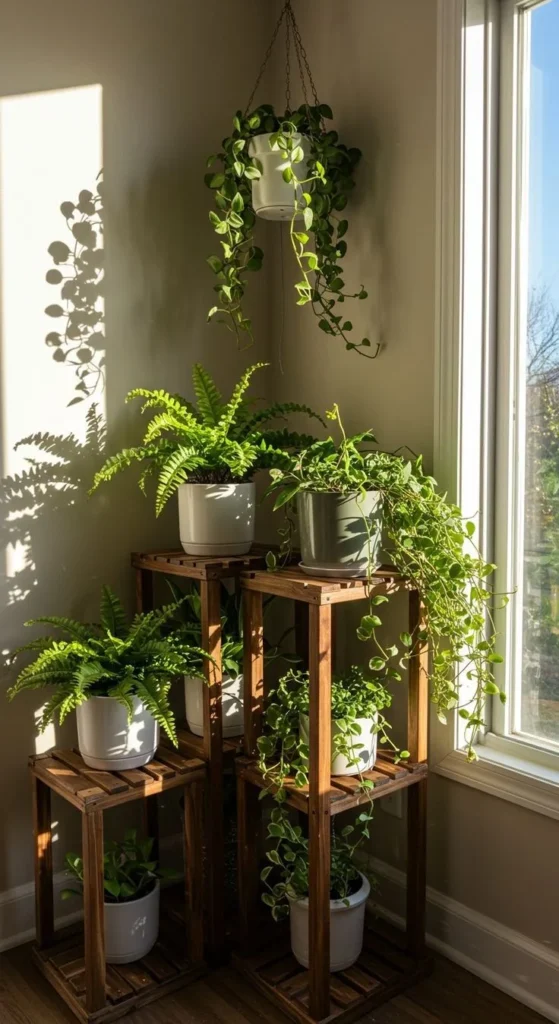
A wilting, neglected plant undermines its own purpose in Vastu, so a little consistent care matters as much as the initial placement decision.
Water according to the specific plant’s needs, not a single blanket schedule. Succulents like jade and aloe vera need infrequent, light watering, while peace lily and tulsi prefer consistently moist soil. Overwatering is a more common killer than underwatering for most of the plants on this list.
Check light levels honestly before committing to a spot, since a plant placed in insufficient light will struggle regardless of how perfectly it matches its ideal Vastu direction. Prune and clean regularly, removing yellowing or dead leaves promptly, since keeping a plant looking genuinely healthy is part of what Vastu considers important, not just its presence in the home. Repot when needed, typically once a plant has clearly outgrown its container, to keep growth healthy rather than root-bound and stressed.
If a plant does dry up or decline despite your care, replace it fairly promptly rather than leaving it in place, since a visibly dying plant, particularly a money plant, is considered a genuinely bad sign in Vastu tradition, not a neutral one.
For more on setting up your home’s energy from the ground up, our guide on Vastu tips for a new home in Hyderabad is a useful companion to this list, and if you’re still finalising your entrance, our guide to main door Vastu pairs naturally with a marigold or tulsi placed just outside it. For the kitchen specifically, our guide on stove and sink layout for prosperity covers the next space most homeowners ask about after their plants and entrance are sorted.
Key Takeaways
- Choose the plant based on both its recommended Vastu direction and the light available in your space.
- Money plant and jade suit the southeast, while tulsi and marigold work well in east-facing spaces.
- North-facing spots are suitable for plants such as snake plant and peace lily that tolerate lower light.
- Small balconies and window ledges can accommodate several Vastu-approved plants without needing a garden.
- Cactus, thorny plants, milky-sap plants and bonsai are generally avoided inside the home.
- A healthy, thriving plant is considered more favourable than one that is dried, neglected or wilting.
- Regular watering, pruning, cleaning and repotting help keep Vastu plants healthy and effective in their intended space.